Sistema de Informação Bartolomeu Costa Cabral
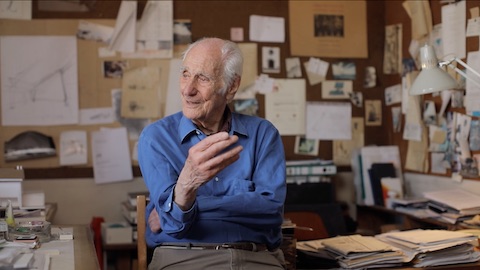
Bartolomeu Costa Cabral no seu atelier, junho de 2019.
"A Arquitectura tem de falar às pessoas, tem de ser uma companhia, tem de dar sentido aos epaços criados e, só assim, podemos falar da sua humanização. Julgo que nas obras que fui fazendo ao longo da minha vida profissioanl, existe uma constante relação com as pessoas". (Bartolomeu Costa Cabral, A Ética das Coisas, 2019)
Bartolomeu Costa Cabral, um dos mais importantes arquitetos portugueses da atualidade, nasceu em 1929 em Lisboa, onde vive e trabalha, tendo obtido o diploma de Arquiteto em 1957 pela Escola Superior de Belas Artes de Lisboa. Ainda como estudante integrou, em 1954, o Gabinete de Estudos e Urbanização da Câmara Municipal de Lisboa, onde permaneceu até 1959. Iniciou o seu percurso profissional no atelier de Nuno Teotónio Pereira, com quem projetou o Bloco das Águas Livres (Lisboa,1959), edifício de habitação coletiva classificado como Monumento de Interesse Público. Entre 1962 e 1967 estagiou em Paris, no Centre Scientifique et Technique du Batîment; em Londres, no Greater London Council; e em Lisboa, no Laboratório Nacional de Engenharia Civil. De 1960 a 1963 foi arquiteto da Federação de Caixas de Previdência e de 1969 a 1996 colaborou no Atelier GPA, dos Arqs. Maurício de Vasconcelos e Luís Alçada Baptista, tendo sido responsável pelo desenho de edifícios públicos, como a Sede da Sociedade Portuguesa de Autores, (Lisboa,1971), e de ensino universitário e politécnico, como a Universidade da Beira Interior (Covilhã, 1973-93), a Universidade do Minho (Guimarães, 1986), a Escola Superior Agrária de Bragança (1986) ou Escola Superior Agrária de Santarém (1988).
Da sua vasta obra, destacam-se ainda a Escola Primária do Castelo, (Lisboa 1960), o Conjunto de 600 fogos em Olivais Sul (em co-autoria com o Arqt.º Nuno Portas, Lisboa, 1961), o Conjunto de 300 fogos no Bairro de Olivais Sul (em co-autoria com o Arqt.º Nuno Teotónio Pereira, Lisboa,1963), o Bairro do Pego Longo, no âmbito das operações SAAL, (Sintra,1975-95), a Escola Superior de Tecnologia de Tomar (1988), a Faculdade de Engenharia da Universidade Católica Portuguesa (Sintra, 1996-2002), a Biblioteca Central e o Museu de Lanifícios da Universidade da Beira Interior (Covilhã, 1998-2003), a Estação da Quinta das Conchas do Metropolitano de Lisboa (2002) ou Habitações Unifamiliares em Lisboa e Beja.
Para além da sua excecional atividade como arquiteto, amplamente publicada, lecionou na Escola Superior de Belas Artes de Lisboa e desempenhou cargos diretivos no Sindicato Nacional dos Arquitectos e na Seção Portuguesa da União Internacional de Arquitectos.
Bartolomeu Costa Cabral recebeu vários prémios ao longo da carreira, como o prémio Eugénio dos Santos, em 1997 (com Nuno Teotónio Pereira pela remodelação do Teatro Taborda, em Lisboa), o prémio de arquitetura Raul Lino, em 1978 (pela agência da CGD de Sintra), a menção honrosa do prémio Valmor, em 2009 (habitação individual na Travessa da Oliveira, em Lisboa), e foi distinguido como Grande-Oficial da Ordem do Infante D. Henrique (2022).
Faleceu em Lisboa no dia 20 de abril de 2024.
Em 2019, Bartolomeu Costa Cabral doou à Fundação Marques da Silva o seu acervo profissional, composto por mais de cento e trinta projetos representativos da sua abrangente actividade, entre edifícios públicos e privados de diferentes programas e escalas, concursos de arquitetura, planos de urbanização ou mobiliário. Este acervo está em fase de tratamento, mas já disponível para consulta no Arquivo Digital da Fundação.
Bibliografia: Bartolomeu Costa Cabral. 18 obras
Exposições: A Ética das Coisas. Bartolomeu Costa Cabral arquitetura 1953-2012 | Tomar (2019); Oeiras (2020).
Bartolomeu Costa Cabral / um arquivo em construção (Porto, Fundação Marques da Silva, 2021); Todos os tempos se cruzarão (Coimbra, Sala da Cidade, 2023/24).
Prémios e distinções: AICA 2019 ; Grau de Grande-Oficial da Ordem do Infante D. Henrique (2022)
Artigos: ProArq (caderno 34) "O Edifício na Praça de Martim Moniz (1973-1984), de Bartolomeu Costa Cabral: uma proposta de continuidade", por Mariana de Oliveira Couto
Registos vídeo: Bartolomeu Costa Cabral/atelier rua da alegria